


omes are no longer organised around single-purpose rooms. As work, leisure, and wellbeing increasingly overlap, technology is reshaping how people use interior space. Fitness no longer requires a dedicated gym, play is not confined to consoles in living rooms, and design decisions now account for equipment that supports movement, interaction, and data-driven feedback. This convergence is changing not just how people exercise or play, but how interiors themselves are planned and experienced.
For golfers exploring how sport fits into domestic space, discussions such as Indoor Golf Outlet often arise as part of a wider evaluation of how technology, recreation, and home design intersect. The question is no longer whether fitness or play belongs at home, but how these activities can be integrated without overwhelming the space.
From Dedicated Rooms to Hybrid Environments
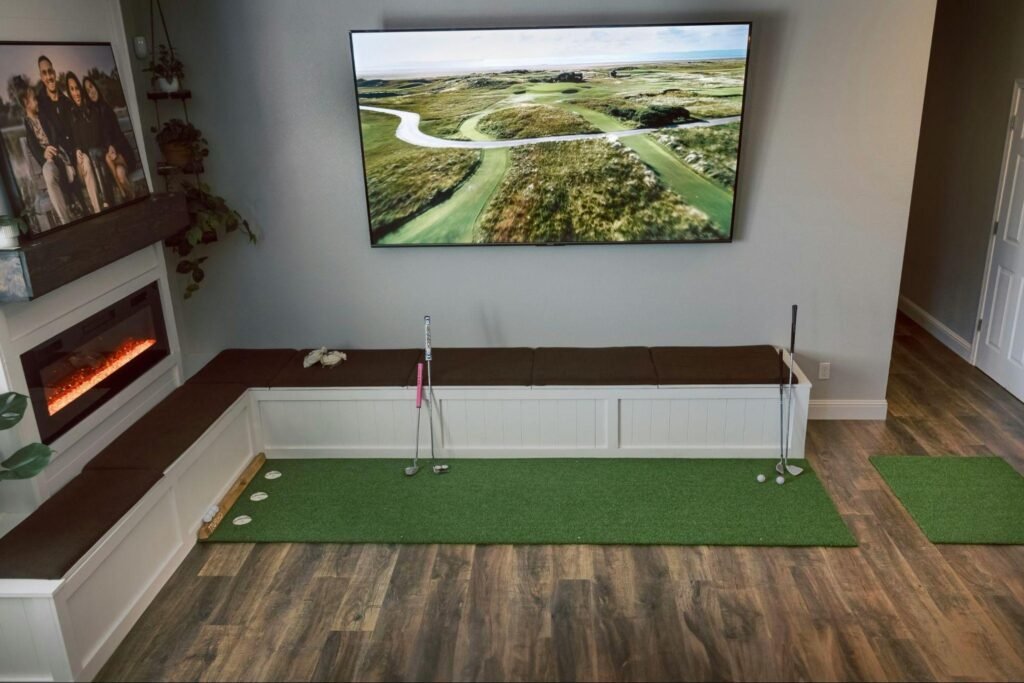
Traditional interior design relied on clear separation: bedrooms for rest, living rooms for leisure, and gyms or studios located elsewhere. Technology has eroded those boundaries. Compact, modular equipment and software-driven systems allow activities to coexist within the same footprint.
Fitness platforms that track movement, virtual sports simulations, and interactive training tools are designed to fit into multipurpose rooms. A garage, spare bedroom, or even part of a living area can now support physical activity without permanent structural changes. Design choices increasingly reflect this hybridity, favouring adaptable layouts over fixed-use rooms.
This shift mirrors broader lifestyle changes, particularly the rise of remote work and home-based leisure.
Fitness as a Design Consideration
Fitness technology has become more design-aware. Earlier generations of home equipment prioritised function over form, often clashing visually with domestic interiors. Modern systems increasingly consider aesthetics, sound levels, and storage.
Slim profiles, neutral colour palettes, and fold-away components allow fitness tools to blend into home environments rather than dominate them. Screens double as entertainment displays, mats are designed to complement flooring, and sensors integrate quietly into existing structures.
As a result, fitness is no longer something that disrupts a room’s purpose; it becomes one of several supported activities within it.
Play Moving Beyond Screens
Play has also evolved. While gaming consoles remain popular, interactive play now includes physical engagement, spatial awareness, and real-world movement. Technologies that combine simulation with physical action blur the line between sport and gaming.
Golf simulators, motion-based training platforms, and virtual sports experiences exemplify this trend. They offer the engagement of play alongside measurable physical effort, appealing to users who value both entertainment and skill development.
Interior design adapts accordingly, prioritising clear sightlines, impact-resistant surfaces, and flexible lighting to support these experiences without compromising everyday use.
Data, Feedback, and the Quantified Home
A defining feature of modern fitness and play technology is feedback. Sensors, cameras, and software generate data that informs performance, tracks progress, and personalises experiences. This data-centric approach influences how spaces are used.
Rooms are arranged to optimise sensor accuracy, lighting conditions, and viewing angles. Design becomes functional in new ways, shaped by technical requirements as much as visual ones. The home evolves into a semi-instrumented environment where movement is observed and analysed.
This integration of data into domestic life reflects a wider cultural interest in self-measurement and optimisation.
Interior Design Responding to Activity
Interior designers increasingly account for active use when planning spaces. Flooring choices consider shock absorption and durability. Wall treatments factor in impact resistance or sound dampening. Furniture placement allows for movement rather than static occupation.
The presence of fitness and play technology encourages interiors that support transitions: from work to activity, from play to rest. Lighting schemes, storage solutions, and modular furnishings help rooms shift roles throughout the day.
Design, in this context, supports behaviour rather than dictating it.
Accessibility and Everyday Use
Another reason technology is reshaping interiors is accessibility. Home-based fitness and play reduce barriers related to time, travel, and scheduling. Activities can be integrated into short breaks rather than requiring dedicated outings.
This accessibility changes patterns of use. Instead of long, infrequent sessions, people engage more often in shorter bursts. Interior spaces must accommodate this rhythm, remaining ready for use without extensive setup or teardown.
Ease of access becomes as important as performance, influencing both product design and interior layout.
The Social Dimension of At-Home Play
Technology has also brought social elements into domestic fitness and play. Online competitions, shared virtual spaces, and remote coaching allow people to connect without leaving home. Interiors now support interaction as well as activity.
Screens, audio systems, and camera placement are considered not only for performance tracking but for communication. This social layer adds complexity to design decisions, blending private space with shared digital experience.
Homes become nodes in broader networks of play and participation.
Health, Movement, and the Built Environment
The blending of fitness and design reflects growing awareness of the relationship between movement and health. Sedentary lifestyles have prompted interest in environments that encourage activity as part of daily routine.
According to analysis referenced by the World Health Organization, regular physical activity integrated into everyday life is a key factor in long-term health outcomes. When homes support movement naturally, barriers to activity are reduced.
Technology enables this integration by making activity more engaging, measurable, and adaptable to individual needs.
Balancing Technology With Livability
Despite these advances, balance remains essential. Not every home benefits from high-tech installations, and over-instrumentation can detract from comfort. Successful integration depends on proportion and intent.
Technology works best when it supports existing lifestyles rather than imposing new ones. Interiors that remain flexible, visually calm, and easy to maintain are more likely to sustain long-term use of fitness and play systems.
Design choices should allow technology to recede when not in use, preserving the primary function of the home as a place of rest and connection.
A Converging Future
The blending of fitness, play, and interior design reflects broader changes in how people live. As technology continues to shrink, adapt, and integrate, homes will increasingly support a range of activities once confined to external spaces.
This convergence does not signal the end of gyms, courses, or social venues, but it does redefine the role of the home. It becomes a flexible environment where movement, leisure, and daily life coexist.
In that sense, technology is not simply adding new functions to interiors. It is reshaping expectations about what domestic space can support, and how actively people inhabit it.