


There is a moment, just before a game begins, that often goes unnoticed. Cards are shuffled, pieces are arranged, and someone inevitably asks, “Wait, how does this work again?” It is a small pause, but it reveals something deeper about how we engage with one another.
In a world shaped by speed and constant digital input, even leisure has become fragmented. We scroll, we skim, we move quickly from one thing to another. And yet, when people gather around a table to play a game, something shifts. The pace slows. Attention sharpens. Interaction becomes intentional.
Games, in their simplest form, invite us to be present, not just with the activity, but with each other.
Understanding as the First Step to Connection
Before any game truly begins, there is a shared process of understanding. The rules must be explained, clarified, sometimes even negotiated. This moment, often overlooked, sets the tone for everything that follows.
Confusion at this stage can create hesitation. People withdraw slightly, unsure if they will keep up or make mistakes. But clarity has the opposite effect, it builds confidence and invites participation.
This is why accessible explanations have become an essential part of modern play. Reading the Playiro guide helps bridge that initial gap, offering clear and approachable instructions for card, board, and party games. Instead of flipping through dense rulebooks or relying on fragmented explanations, players can quickly grasp the structure of a game and move forward together. In doing so, the focus shifts from figuring things out to actually enjoying the experience, a small but meaningful difference that changes the entire dynamic of the group.
The Return of Shared Attention
What makes games powerful is not complexity or competition, but shared attention. Everyone at the table is oriented toward the same goal, the same set of rules, the same unfolding moment.
This kind of collective focus has become increasingly rare. Much of modern life is characterized by divided attention, notifications, background noise, and constant interruptions. Games, by contrast, create a contained environment. They ask us to stay, to engage, to respond.
It is in this space that conversation flows more naturally. Laughter feels less forced. Even silence becomes comfortable, filled not with distraction but with presence.
Why Simplicity Matters More Than Ever
There is a common assumption that depth comes from complexity. But in the context of social play, simplicity often carries more value.
A game that is easy to understand allows players to immerse themselves more fully. It removes the cognitive friction that can otherwise interrupt the experience. Instead of thinking about the rules, players begin to think about each other, how someone reacts, how strategies unfold, how the mood of the group evolves.
This is particularly important in mixed groups, where not everyone shares the same level of familiarity with games. Simplicity creates inclusion. It ensures that no one feels left behind.
In this sense, the clarity of a game’s structure becomes as important as the game itself.
Play as a Form of Communication
Games are often described as entertainment, but they also function as a subtle form of communication. They reveal patterns, how people take risks, how they collaborate, how they handle uncertainty.
These patterns are not always visible in everyday conversation. Play creates a different context, one where people express themselves more freely.
According to insights from the National Institute of Mental Health, shared activities that involve interaction and engagement can support social connection and emotional well-being. While games may seem simple on the surface, they provide a structured way for individuals to connect, respond, and relate to one another.
This reinforces the idea that play is not separate from meaningful interaction, it is one of its most natural forms.
The Value of Slowing Down
Perhaps the most significant aspect of playing games is the way it changes our relationship with time.
A game cannot be rushed without losing its essence. It unfolds at its own pace, requiring attention and patience. In doing so, it offers a rare opportunity to step outside the urgency that defines much of modern life.
This slowing down is not unproductive. On the contrary, it allows for deeper engagement. It creates space for reflection, for observation, for genuine interaction. In a culture that often prioritizes efficiency, these moments can feel almost unfamiliar, and therefore, more valuable.
Learning Together, Not Alone
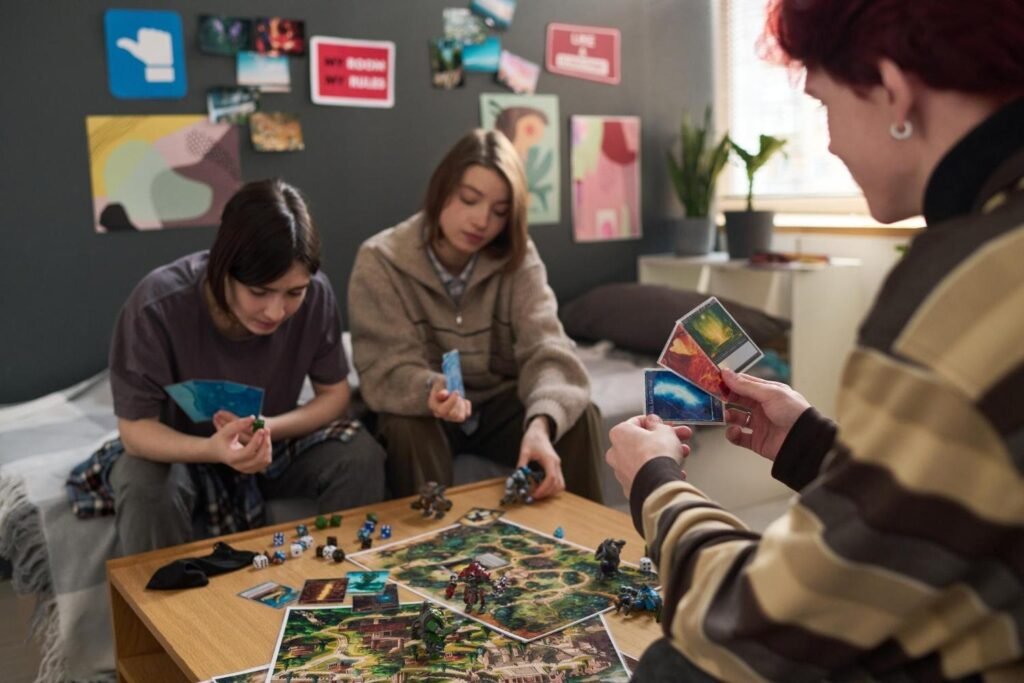
Another overlooked aspect of games is the collaborative nature of learning. Even in competitive settings, players often help one another understand the rules, correct mistakes, and navigate the flow of the game.
This shared learning process builds a sense of trust. It reinforces the idea that participation matters more than perfection.
When people learn together, they are more likely to stay engaged. They feel part of something, rather than separate from it. In this way, the act of learning becomes just as important as the act of playing.
A Quiet, Lasting Relevance
Despite rapid technological change, games have remained remarkably consistent in their role within human life. They adapt in form, but their core purpose remains the same: to bring people together.
What has changed is the context in which they exist. Today, they serve as a counterbalance to digital overload, a way to reconnect with something tangible, immediate, and shared.
The growing emphasis on clarity, accessibility, and inclusivity reflects this shift. It is not about reinventing games, but about making them easier to approach and more enjoyable to experience.
The moment before a game begins, the question, the explanation, the shared understanding, is not just a prelude. It is part of the experience itself. When that moment is handled with clarity and ease, everything that follows becomes richer. People engage more freely. The atmosphere becomes lighter. The experience feels more complete.
In the end, games are not just about winning or losing. They are about learning, connecting, and being present, together. And sometimes, all it takes to unlock that experience is a clearer way to begin.